Trump Blockades Iran's Oil Ports
US naval blockade of Iranian ports in effect since April 13 after Islamabad peace talks collapsed; April 22 ceasefire expires in six days; oil at ~$95.
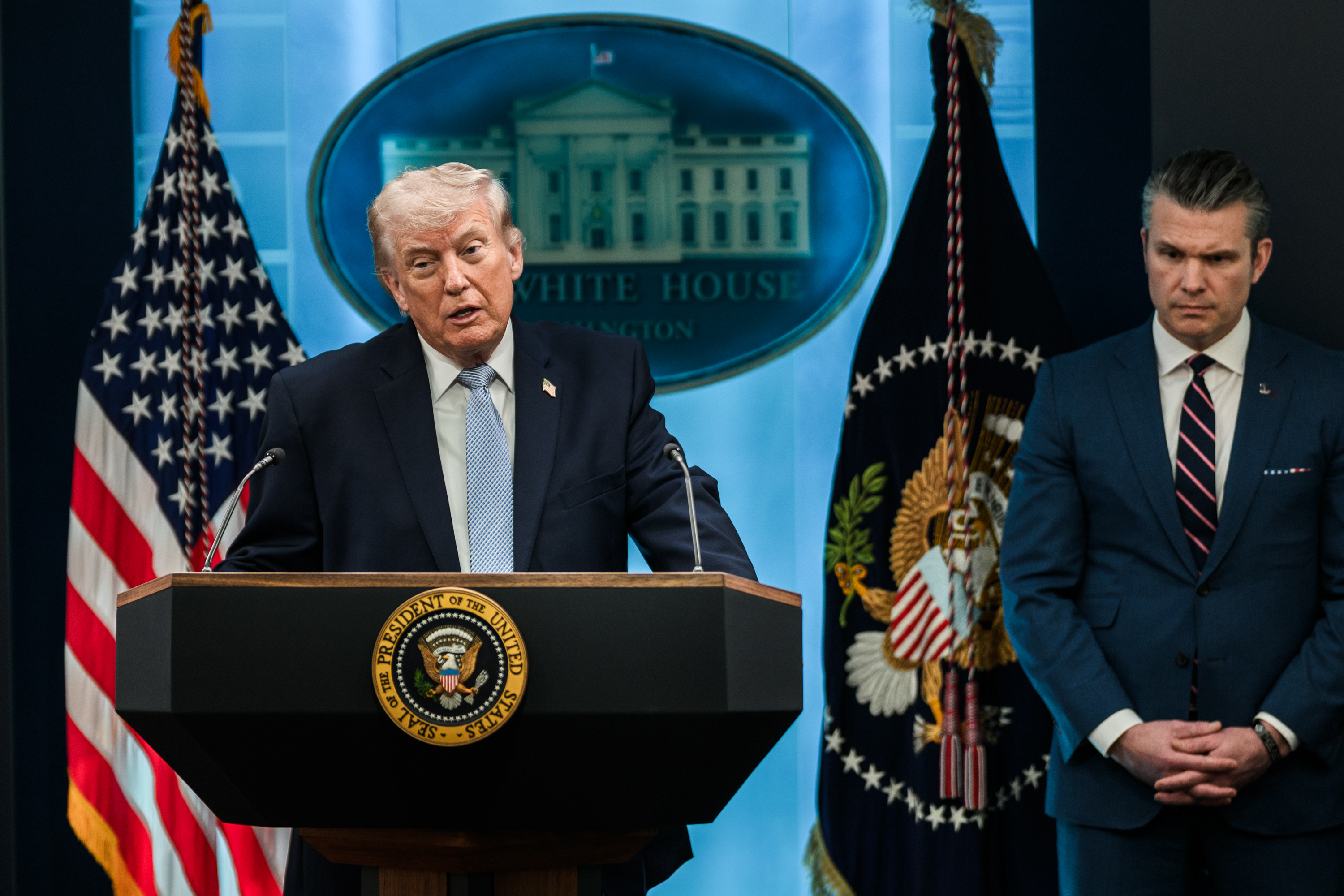
Trump ordered the blockade and warned Iranian vessels would be 'eliminated'; Treasury threatened secondary sanctions on two Chinese banks; no public direct channel to Tehran.
The Situation
US Navy is blockading Iran's ports, oil is at $95 a barrel, and a two-week ceasefire expires April 22 — six days out — with no direct US-Iran communication line beyond a Pakistani general carrying notes between capitals. Either a framework exists by next Wednesday or CENTCOM is enforcing an act of war against a nuclear-threshold state with no off-ramp.
What the President Did
President Trump ordered the blockade on April 13 following the collapse of the Islamabad talks, warning that Iranian ships approaching US forces would be "eliminated," then told Fox Business two days later the war is "very close to over." Treasury Secretary Bessent announced the US is prepared to apply secondary sanctions — the kind that punish foreign banks for doing business with Iran — and warned two specific Chinese banks. The administration has not formally requested a ceasefire extension and has disclosed no direct channel to Tehran beyond Field Marshal Munir's shuttle.

My Decision
My Foreign Affairs counsel pushed for closing the deal through Pakistan — run everything through Islamabad, let Field Marshal Munir carry the paper, take the deal while the pressure is maximum. My Defense team wanted a hold-and-coerce posture: keep the blockade in place, don't fire, let the economic damage to Tehran do the work. My Economy chief argued the core ask on the table should be a monitored oil-export ceiling — modeled on the 2022 Russian crude cap — not open-ended demands Tehran can't accept.
I'm agreeing with all three, and I'm making the price cap the substantive ask — roughly $60 a barrel — so Tehran has a concrete yes to say and we have something verifiable to hold them to.
So: I formally request a 30-day ceasefire extension through Munir today. I name a Senate-confirmed principal — the Deputy Secretary of State — as the designated US interlocutor, so Tehran knows who can actually close. I freeze blockade enforcement at current levels — no boardings, no disabling fire. I put the price cap on the table as the core economic ask. I hold the secondary-sanctions warning on the two Chinese banks in reserve as leverage rather than firing it this week. And I take Qatar's Emir's call back and ask him to carry a parallel message — Pakistan can't be our single point of failure.
Where I Agree / Where I Disagree
Agree: The blockade itself was a defensible coercive move after the Islamabad talks collapsed. The geometry — targeting vessels docking at Iranian ports while preserving Hormuz transit for everyone else — is smarter than a full closure and gives Gulf partners political room to stay quiet. The secondary-sanctions warning on Chinese banks is the right threat; dollar dominance in shipping insurance is our real chokepoint. Bessent has the instrument right.
Disagree: Three places. First, "eliminated" is the wrong word from a President six days before a ceasefire cliff — it locks in a kinetic tripwire that a single nervous tanker captain could trigger. Second, not requesting a ceasefire extension is a mistake; ambiguity at a deadline with no direct channel is how wars start by accident, not on purpose. Third, one Pakistani general carrying handwritten messages is not a negotiating architecture — it's a prayer. I name a US principal with authority to close, today.
Why
Coercive diplomacy works when the adversary can see both the pressure and the exit. Take one of those away and you don't have diplomacy — you have a countdown.
The 1991 Gulf War coalition assembled 35 countries, pushed Iraq out of Kuwait, and stopped deliberately at the Iraqi border. It worked because the mandate was narrow and the off-ramp was visible. The 2013 Syria chemical-weapons episode converted a US strike threat into a Russian-brokered removal deal — a channel existed when the climbdown was needed, so both sides could land somewhere.
What I'm looking at right now has the pressure but not the exit. No extension request. No named interlocutor. A President using the word "eliminated" on the record six days before a ceasefire cliff. That's the 1914 problem, not the 1991 one — the structure where a small accident becomes a large war because nobody has the authority or the channel to stop it.
The price-cap mechanism is the cheapest deal architecture available because it works for everyone. Tehran gets revenue (which matters at home). We get verification (the sanctions scaffolding stays intact). The Fed gets room to not hike into an oil shock. The Russian crude cap proved the structure is workable even with leaks — the leaks don't matter if the instrument still shapes volumes.
And on China: triangulation beats confrontation this week. Sanctioning the two banks now burns a lever I may need in six months on Taiwan. Holding the threat credibly is worth more than firing it.
Projected Impacts
- Short term (days–weeks): Ceasefire extended 30 days; oil drops toward $80–85 on the extension announcement alone; Munir's shuttle converts into a structured Islamabad or Doha channel with a named US principal. If Tehran refuses the extension, we know within 72 hours and the blockade hardens with eyes open, not by accident.
- Medium term (months): Either a framework deal with verifiable enrichment constraints and an oil-export ceiling, or a managed long coercion campaign with sanctions doing the compellence work while the blockade de-escalates into a monitoring posture. Chinese banks comply quietly rather than publicly, preserving the secondary-sanctions tool for future use.
- Long term (years): US retains credibility that it can use military leverage to close deals rather than just to break things — the scarcer and more valuable asset in a multipolar decade. If this collapses into a shooting war in the Gulf, gas hits $5 a gallon through the 2026 midterms and we own an open-ended conflict with no defined end state, which is the worst available outcome.
Cabinet Reactions
Defense advisor: A blockade you won't enforce invites probing. Iranian state media is already claiming four vessels transited; freezing enforcement after that is reading like weakness. A decisive boarding this week is less escalatory than ambiguous enforcement stretched over weeks.
I hear that, and the credibility cliff is real. But a kinetic incident inside seven days with no defined endstate is the worse failure mode. I'm accepting the probing risk to buy the negotiating window.
Foreign Affairs advisor: You're wasting the moment of maximum leverage by holding the Chinese-bank sanctions in reserve. Trigger them now and you reset the bargaining table in our favor.
Leverage spent is leverage gone. I want Beijing quietly pressing Tehran to take the deal — not publicly retaliating against us. The threat works better unfired this week.
Sources
- CNBC: US says Hormuz blockade 'fully implemented'
- CNN: Day 47, Trump says Iran war 'very close to over'
- CNN: Day 46, few ships pass Strait since blockade
- CNN: Trump warns Iran as US blockade takes effect
- NPR: Trump warns Iran's ships will be 'eliminated'
- NPR: US-Iran peace talks in Islamabad collapse
- Bloomberg: Trump's Hormuz blockade deadline hits
- CNBC: Trump says US will blockade Strait of Hormuz
- NBC News: Live updates on US blockade